

The Whoop Band has cornered the market thus far on a wearable band that provides very detailed health and fitness data. But with teasers and announcements coming from other bands, is there a chance that Whoop will find itself overtaken by competitors in this space?

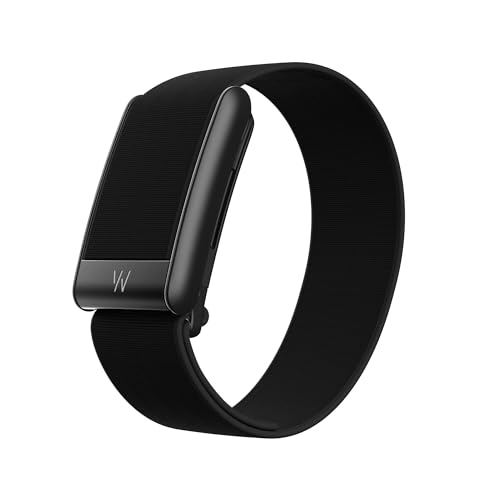
Whoop wearable on wrist
Whoop’s Model
Whoop members pay a subscription fee to use their service. Plans start at $199/yr for the One membership, followed by their mid-level Peak plan at $239/yr, and finally the top-tier Life plan at $359/yr. With the purchase of a subscription, you receive the Whoop monitoring device, band, and charging accessories, as well as access to varying levels of data and analysis on Whoop’s app, depending on your subscription. Their model is traditionally perceived as pay for the subscription, but the hardware is free.

Whoop subscription tiers
This model has received positive feedback, and what users seem to like most about Whoop’s product is the range and specificity of the data, as well as the thorough analysis and user-friendly experience of the Whoop app. The user experience is incredibly well-designed, and customers can use heart rate, activity monitoring, and the data they input, among other features, to receive exciting analytics such as how different activities affect their sleep or their “Whoop age.” Whoop also has a daily journaling feature that allows users to input specific details about their day and track how those details impact their health score. The level of detail that Whoop takes into account has been a big pull for customers.
Whoop has also been on the cutting edge of health tracking technology. Both their hardware and software offer precise analytics that surpass those of most other products on the market. Their Blood Pressure Insights feature is unique amongst most wearables and despite their recent warning letter from the FDA, Whoop seems intent on continuing to innovate in the space.
Who’s the Competition?
Fitness tracker brand Polar announced in mid-June that they would be unveiling a new screenless wearable, a first of its kind for the company. The press release states that the new product will be a “subscription-free alternative to other health bands and fitness trackers on the market.” This is a direct call out to Whoop’s business model and is likely meant to differentiate themselves from the leading competitor in this space. The tracking band is set to release on September 3.

Polar’s screenless fitness band teaser
Amazfit’s fitness band, the Helio Strap, is available now. Like Polar’s upcoming version, it is not a subscription-based product. Instead, it costs $99.99, a significant discount to even Whoop’s lowest subscription, and this is just a one-time payment. The band connects to the Zepp app, where users can check out their data.
While the Helio Strap resembles the Whoop, there is a consensus among reviewers – such as DC Rainmaker – that the band simply doesn’t perform as well in the software space. It is understood that the data collected is generally less accurate than Whoop’s, and it lacks the same level of in-depth analysis and user-friendly interface that Whoop offers.

Amazfit’s Helio Strap

Garmin recently entered the screenless wearable space with the launch of its Index Sleep Monitor. While the Index Sleep – as the name suggests – is only intended to be worn while sleeping, it could be a sign of things to come for the fitness watch giant. Garmin has the baseline technology to create a 24/7 tracking band that could provide the same analytics as its watches, or perhaps more. DC Rainmaker even tested wearing the Index Sleep for 24 hours. We’ll have to wait and see if a Whoop competitor really is in the pipeline at Garmin.

Garmin’s Index Sleep Monitor
So, Is Whoop at Risk?
The short answer is, right now, it doesn’t seem like it. Without knowing much about the functionality of Polar’s upcoming release, it seems like it – and the Amazfit – will have trouble living up to the standard of data collection and well-synthesized analytics that users have come to love from Whoop.
The Helio Strap does offer a lower-cost alternative to people taking an interest in their fitness, but not enough of an interest that they feel they need to shell out for the Whoop. And with that band, the Polar – and any fitness band Garmin releases – there is the added benefit of being able to use it in conjunction with other products from the company, like their GPS watches. However, the experience of using these products will largely hinge on the user experience in their existing apps, which currently lag behind that of Whoop.
I believe we are at the beginning of an expanding market of screenless wearables, and perhaps Garmin plans to get in on the fun eventually. But for now, it will take a lot more than the options we are seeing to dethrone Whoop.


Join the conversation. A free account lets you comment, reply and say how updates are running.
Sign up freeSign in
No comments yet. Start the conversation.