


Garmin upgraded nearly every major lineup this year. Across AMOLED models, display brightness improved, while Solar units gained efficiency and clearer contrast. Flashlights moved beyond flagship placements and reached the mid-tier (Venu, Instinct), and mics/speakers followed the same path, making “smarter” watches the default rather than the exception.
Premium materials appeared more often (Venu 4, Forerunner 970), and training metrics continued to broaden across the catalog rather than staying locked to a single tier. The biggest late-year shift was connectivity: Fenix 8 Pro introduced satellite communication and LTE enabling safety and communication without requiring a phone. Garmin also released a Fenix 8 MicroLED, the first MicroLED smartwatch and the brightest wearable display on the market.
Instinct 3 — January 6, 2025
The first launch of the year, The Instinct 3 introduced an AMOLED option on a traditionally monochrome MIP watch line, while the non-AMOLED versions gained more efficient solar and a better contrast display. The lineup separated into Instinct E, standard Solar, and AMOLED, with each keeping the same button-only controls and breadcrumb navigation. Elevate Gen 4 heart rate sensor remained in place instead of V5, and maps were still not included. A built-in flashlight was added, consistent with other 2025 releases, and the launch breakdown in Garmin’s announcement outlined feature tiers without changing the watch’s position in the lineup.

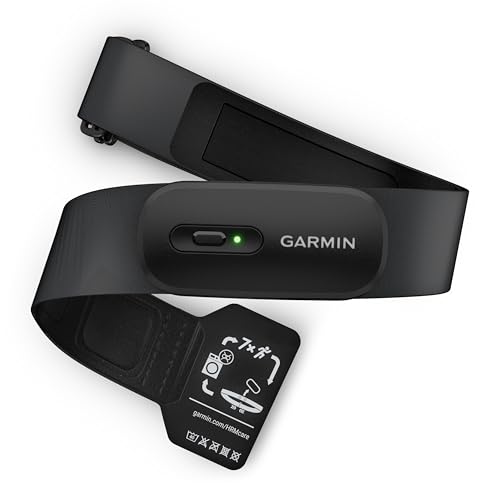
HRM-200 — January 6, 2025
Garmin also introduced new heart rate monitors, including the HRM-200, which replaced HRM-Dual with a redesigned pod and strap and the option to transmit heart rate data in either standard open mode or encrypted mode. ANT+ and Bluetooth connections rose to support multiple devices at once, and the battery compartment was updated to meet child-safety rules while remaining easy to open with the built-in tool. It did not add running dynamics or offline storage, keeping it as Garmin’s basic strap option below HRM-Pro (and later HRM-600) and HRM-Fit.
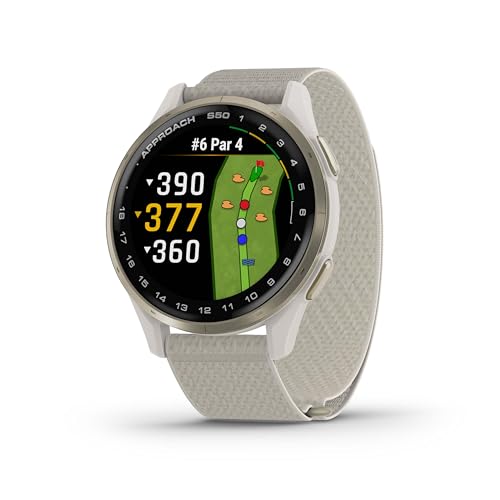
Approach S44 & S50 — January 21, 2025
Approach S44 and S50 brought AMOLED and updated course tools into the mid-tier golf lineup. S44 remained golf-only with no heart rate or wellness features, while S50 added health tracking and NFC for payments. Neither model included maps or the higher-end positioning tech used in S70, keeping both below the flagship in accuracy and feature depth. The role separation and golf feature differences are outlined in Garmin’s golf comparison guide.

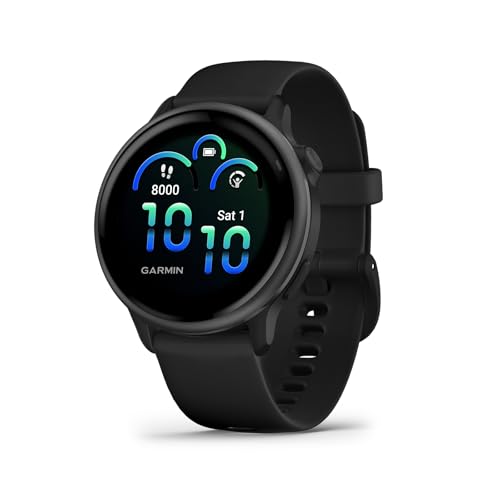
vivoactive 6 — April 1, 2025
vivoactive 6 kept the same 42mm AMOLED design and added smart wake, a reorganized interface, and broader sport coverage, including on-device course following. It continued using the same heart rate sensor hardware as vivoactive 5 and did not add an altimeter, which maintains clear separation from the Venu line for elevation and stair tracking. Data pages expanded, layout navigation changed, and its overall placement as an entry-level option remained directly below Venu. More details are in the vivoactive 6 guide.
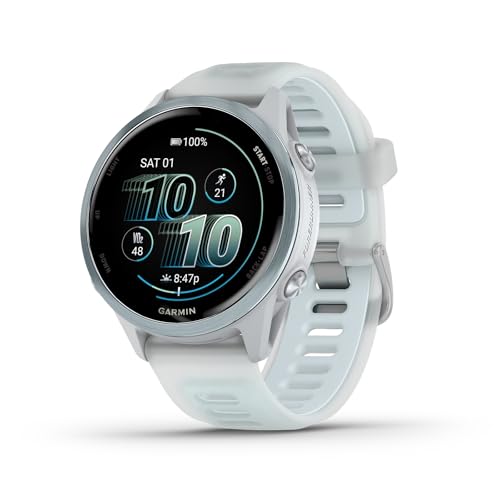
Forerunner 570 — May 15, 2025
Forerunner 570 replaced the 265 and added a speaker, microphone, and the Elevate Gen 5 heart rate sensor, along with a brighter AMOLED display in two sizes. It did not add maps or ECG, which keeps it below 970 in navigation and health depth. This makes 570 the mid-range pick with the new sensor and voice features, but without the advanced tracking and premium materials of the flagship.
Forerunner 970 — May 15, 2025
Forerunner 970 refined the 965 with premium materials and added ECG support, a sapphire lens, and a built-in flashlight while retaining its single 47mm AMOLED layout and full mapping. It remained the only Forerunner with ECG hardware, separating it from 570 despite both adopting the new Elevate Gen 5 sensor. New running metrics and broader health tools positioned 970 as the top tier in the lineup, closing more of the feature gaps between Forerunner and Garmin’s higher end lines without altering the core run-first identity.
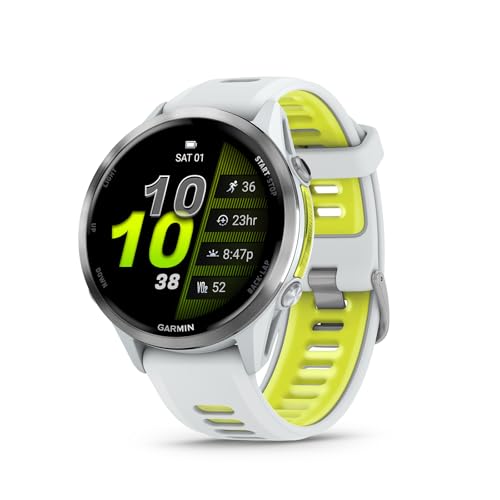
HRM 600 — May 15, 2025
Garmin’s newest high-end heart rate monitor, HRM 600 replaced HRM-Pro Plus and switched to a rechargeable design with a removable pod and secure BLE transmission, aligning with the data-security changes that also led to HRM 200 earlier in the year. It added activity recording without a watch and introduced step speed loss as a new running metric, which launched alongside Forerunner 970. Compared directly in the HRM 600 vs HRM 200 breakdown, the 600 is the high-end strap with advanced dynamics and team-sport support, while HRM 200 remains the basic encrypted heart-rate option.

Venu X1 — June 18, 2025
Venu X1 arrived as a total design reset for the Venu line, adopting a thin rectangular build closer to Venu Sq but with full mapping, flashlight, and higher-end training tools pulled from Fenix and Forerunner. It’s Garmin’s thinnest watch yet with the largest AMOLED screen they’ve shipped, but it drops multi-band GNSS and shortens battery life to make that form factor work. ECG also doesn’t ship here despite having the Elevate Gen 5 HR sensor.
Index Sleep Monitor — June 18, 2025
Index Sleep Monitor launched as a sleep-only band using the same Elevate Gen 5 sensor found in Garmin’s watches. Early speculation pointed to a Whoop-style 24/7 band, but this release confirmed a single-use product: overnight tracking without wearing a watch. It doesn’t replace daytime data, doesn’t track steps or workouts, and exists purely to fill the “I won’t sleep with a watch on” gap.
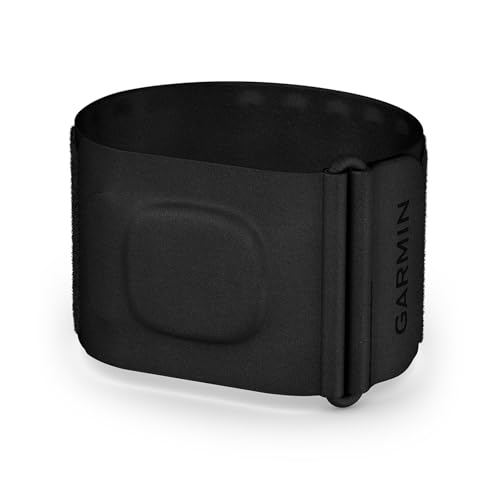
Quatix 8 — June 25, 2025
Quatix 8 arrived as a direct Fenix 8 offshoot, keeping the same AMOLED display, flashlight, titanium hardware, and mic/speaker setup, but adding the usual marine stack: chartplotter control, tide data, sailing modes, boat telemetry, and more. Outside those boating layers, the experience is essentially Fenix 8 with nautical design and voice helm commands.

Fenix 8 Pro — September 8, 2025
Fenix 8 Pro kept the Fenix 8’s full training and mapping platform and focused instead on connectivity. LTE + two-way satellite messaging made it Garmin’s first flagship that can call, text, LiveTrack, and SOS without a phone. Battery drops and added thickness reflect that hardware, and the optional 51mm MicroLED version pushed outdoor brightness to record levels while cutting runtime even further. If you don’t need phone-free communication, the standard Fenix 8 remains the better endurance pick.
The MicroLED edition delivers the brightest smartwatch display ever, but at the cost of endurance, thickness, and price. Always-on runtime drops by more than half versus AMOLED, the case adds ~1mm of depth, and MSRP jumps to $1,999. It proved Garmin could ship MicroLED before Apple, but the launch hardware is still a showcase rather than a practical watch for most. Power draw, touch-layer integration, and total panel efficiency all need refinement before MicroLED becomes a platform standard instead of a high-cost demo build.
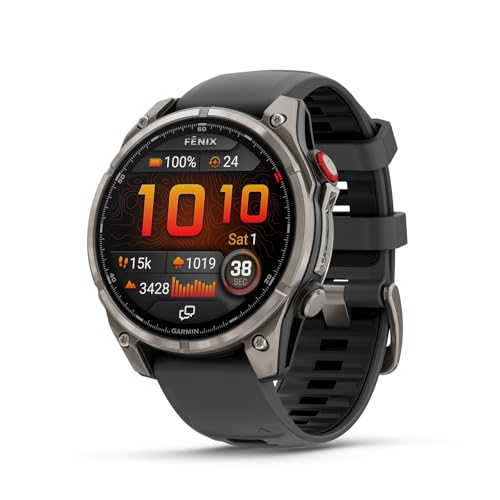
Instinct Crossover AMOLED — September 17, 2025
The Instinct Crossover AMOLED takes the Instinct 3 AMOLED feature set and puts it in a hybrid package with physical analog hands over a 1.2″ AMOLED display with sapphire glass, and a Tactical edition.
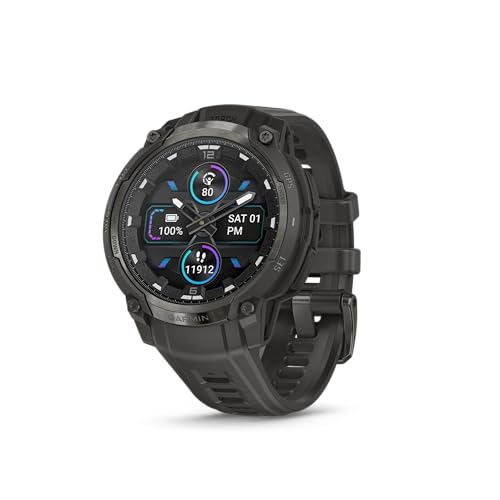
Bounce 2 — September 17, 2025
The Bounce 2 updates Garmin’s kids watch with a round AMOLED display, two-way calling via speaker and mic, and Amazon Music storage, while keeping GPS/LTE safety tools from the original. It’s a clear upgrade in hardware and communication, but pricing doubled to $299.99, making it a more fully featured kids smartwatch rather than the budget-friendly tracker the first Bounce was.
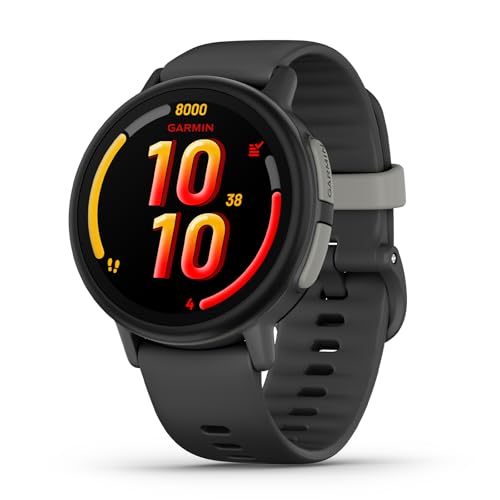
Venu 4 — September 22, 2025
Venu 4 builds on Venu 3 with multiband GNSS, a brighter AMOLED display, and the first Venu flashlight, while keeping ECG, microphone, and speaker support. The real shift is lineup positioning: Venu 4 adds a significant number of training features that bring it much closer to the Forerunner 570 at the same $549 price, but with a flashlight.
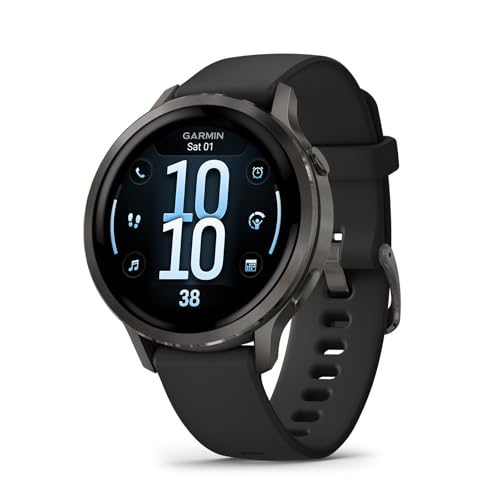
D2 Mach 2 — October 22, 2025
The D2 Mach 2 is essentially a Fenix 8 with aviation tools layered on top. It keeps the titanium build, leakproof buttons, and mic/speaker, but with METAR/TAF access, flight mapping, avionics integration, and voice commands that make it purpose-built for pilots.
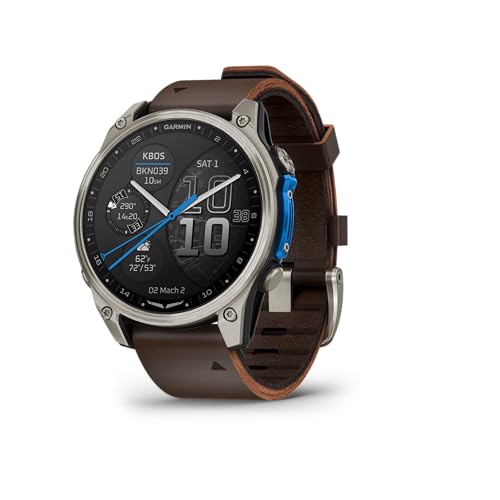
D2 Air X15 — October 22, 2025
The D2 Air X15 is to Venu 4 what the D2 Mach 2 is to Fenix 8. It has the same AMOLED display, full wellness stack, mic/speaker, and new metal build, but with aviation overlays added on top. It replaces the D2 Air X10 with METAR color displays, voice commands, PlaneSync aircraft status, and a dual-mode flashlight, while still stopping short of the full maps and training features of the D2 Mach 2.
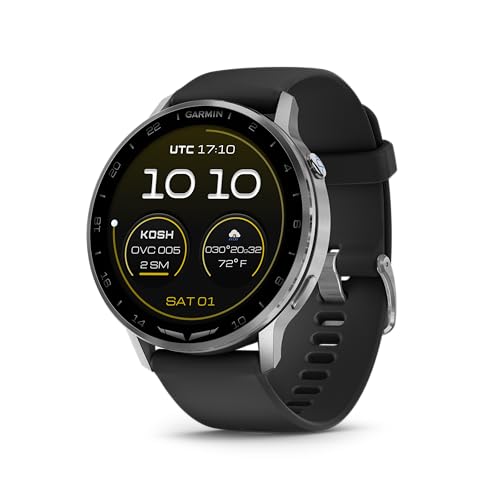


Join the conversation. A free account lets you comment, reply and say how updates are running.
Sign up freeSign in
That is quite a lot of releases.
Not Sure if you’ve covered it Changes to the Connect IQ Store – News & Announcements – Connect IQ – Garmin Forums
I preferred having a web version.
There is also a new beta for some Forerunners. Check their beta forums.
The ConnectIQ web site is now basically just a placeholder. No longer bale to browse anything from there.