

Garmin’s CIRQA Smart Band finally gives the company a true all-day screenless tracker — and that puts it in a short list with WHOOP and Google’s Fitbit Air. Same basic idea (no watch face, metrics in the phone), three very different products underneath.

This is a buyer’s comparison: price model, size, sensors, how recovery/strain/readiness map across apps, bands and clasps, and who each one is for.
The Real Split: Pay Once vs Pay Yearly
Before features, the business model is the clearest difference.
- Garmin CIRQA: $199.99 for the band. Core sleep, heart rate, Body Battery, Training Readiness, and activity tracking live in free Garmin Connect. Connect+ is optional ($6.99/month or $69.99/year in the U.S., with a 30-day trial) for coaching, nutrition, Active Intelligence, and some guided Live Activity extras — not required for the core CIRQA experience.
- WHOOP: Hardware is tied to membership. Public U.S. tiers are roughly One ~$199/year (WHOOP 5.0 + core Strain/Sleep/Recovery), Peak ~$239/year (adds Healthspan / WHOOP Age, Stress Monitor, Health Monitor), and Life ~$359/year (WHOOP MG hardware with ECG and blood-pressure insights). Not every WHOOP is the same device or the same feature set.
- Fitbit Air: Device at $99.99. Day-to-day tracking sits in the Google Health app (Fitbit’s current home). Google Health Premium (formerly Fitbit Premium) is optional at about $9.99/month or $99.99/year for Health Coach / deeper insights — not a gate on basic wear. It’s also bundled with Google AI Pro / Ultra in many countries if you already pay for those.
Rough two-year cost if you stay on the cheapest WHOOP annual plan versus buying CIRQA once:
- CIRQA: about $200 for the band alone. Add Connect+ and you’re looking at roughly $340 over two years at the annual rate ($69.99 × 2) — still below WHOOP One, and still optional.
- WHOOP One: about $400 at $199/year or up to roughly $718 with Life / MG — membership is the product, not an add-on.
- Fitbit Air: about $100 for hardware. Add Google Health Premium and you’re near $300 over two years at $99.99/year — still usually cheaper than WHOOP, with Premium optional for basic wear.
That math is why CIRQA is aimed hardest at people already paying WHOOP every year — and why Fitbit Air still wins the “cheapest way into a screenless band” argument, especially if you skip Google Health Premium (or already get it via Google AI Pro).
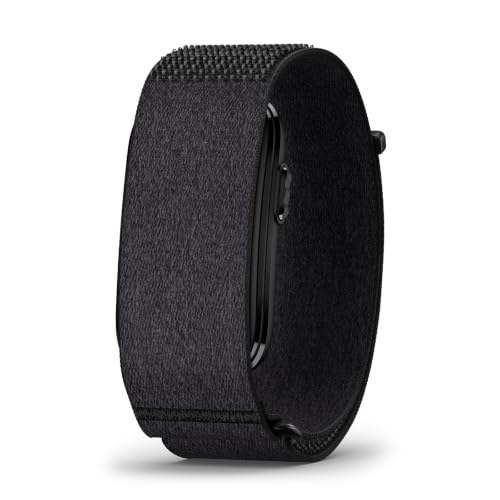
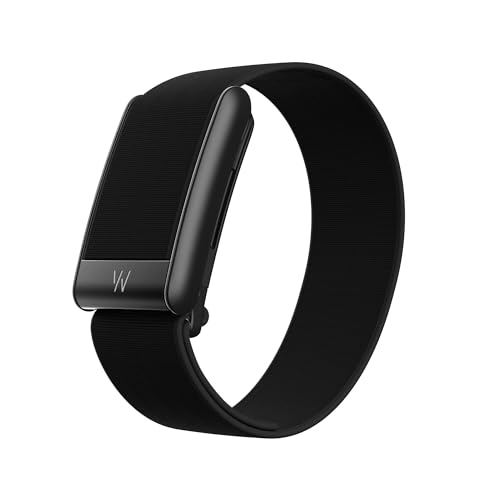
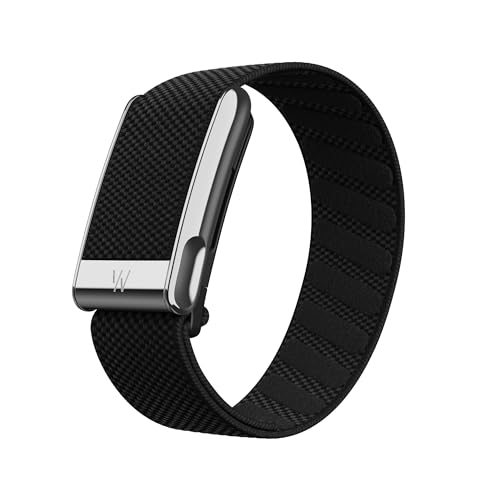
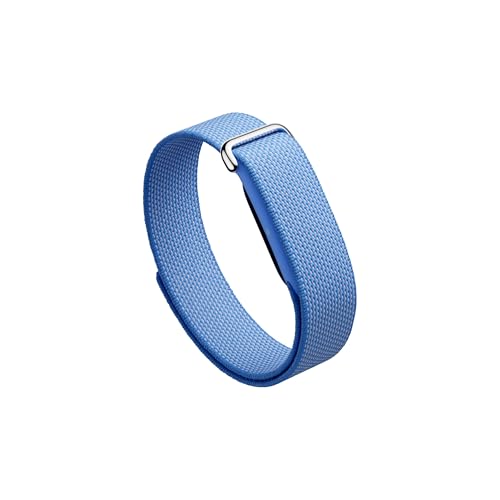
Shop WHOOP and Fitbit Air
CIRQA is sold direct from Garmin for now. For the two Amazon-available rivals:
Size on the Wrist

Module width across the wrist:
- Fitbit Air: 17 mm
- WHOOP 5.0: 24 mm
- Garmin CIRQA: 27 mm (ComfortFit strap listed at 24 mm)
| Length | Width | Thickness | Weight | |
|---|---|---|---|---|
| Fitbit Air | 34.9 mm | 17 mm | 8.3 mm | 5.2 g module / ~12 g with band |
| WHOOP 5.0 | 34.7 mm | 24 mm | 10.6 mm | ~26.5 g |
| Garmin CIRQA | 47 mm | 27 mm | 9 mm | 14.8 g module / ~20.7–21.2 g with wristband |
Fitbit Air is the slender, light option. WHOOP and CIRQA are closer in strap feel; CIRQA’s pod is a bit wider, clearly longer (47 mm vs ~35 mm), a little thinner than WHOOP, and a little lighter once strapped on. Full write-up: CIRQA vs WHOOP vs Fitbit Air size.
Bands and How They Strap On
All three use a removable sensor module in a soft band — but the closure and swap story differ.
- CIRQA: Woven nylon ComfortFit loop with 14 mm quick-release pins. The module seats in the strap like a watch head; you swap official wrist colors ($49.99) or move to an upper-arm band ($59.99) without tools. Closure is a fabric loop / hook-and-loop style adjust — stretchy, shower-friendly, machine-washable band (module out).
- WHOOP: Knit band with a flip-over clasp; the sensor slides into a pocket in the strap. Swappable SuperKnit / CoreKnit / specialty bands and body placements (bicep, apparel) are a big part of the product. On WHOOP MG, that clasp also carries the ECG contact points — a hardware difference you do not get on standard 5.0 clasps.
- Fitbit Air: Textile (or silicone) band with a conventional stainless-steel buckle. Google lists a one-size textile band for 130–210 mm wrists; silicone comes in small/large. The tiny 17 mm module is the least “watch-like” of the three.

Sensor backs and clasps: WHOOP flip clasp, Fitbit Air slim module, CIRQA Elevate optical array and quick-release ComfortFit.
Sensors and Daily Health
All three chase the same 24/7 basics: continuous heart rate, sleep staging, HRV-style recovery signals, stress, SpO2 / Pulse Ox, and women’s health tooling.
CIRQA-specific notes:
- Pulse Ox is off by default (battery impact); turn it on in Connect for overnight breathing-variation insights, and expect a short baseline period.
- No ECG / AFib detection on CIRQA — Elevate Gen. 4 optical HR sensor, not the Gen. 5 ECG path used on higher-end Garmin watches.
- Core “how do I feel today?” stack is Body Battery, HRV Status, sleep score / Sleep Coach, and Health Status — all in free Connect.
WHOOP is not one SKU. All current memberships share Sleep / Strain / Recovery, haptic alarm, steps, women’s hormonal insights, and VO2 Max on either 5.0 or MG hardware — but the tiers diverge:
- WHOOP One (~$199/yr): WHOOP 5.0 hardware; core Sleep/Strain/Recovery. No wireless PowerPack in the entry bundle, and no Health/Stress Monitor or Healthspan.
- WHOOP Peak (~$239/yr): Still 5.0 hardware, but adds wireless PowerPack, Health & Stress Monitor, and Healthspan (WHOOP Age + Pace of Aging).
- WHOOP Life (~$359/yr): MG hardware only — Peak-level software plus on-demand ECG and daily blood pressure insights. The MG clasp is the one with ECG contacts.
Neither Fitbit Air nor CIRQA has ECG/Blood Pressure features.
How the Scores Parallel Across Apps

Home screens: Garmin Connect Essentials + training plan cards; WHOOP’s Sleep / Recovery / Strain rings with insight cards; Google Health’s Today tiles (steps, Readiness, sleep).
WHOOP’s in-app coaching is also more central — the home feed and the WHOOP AI entry point push conversational explanations (low HRV, elevated respiratory rate, what to do next) as part of the core product. On Garmin and Google, AI-style coaching is more of an add-on layer (Connect+ Active Intelligence / Ask Coach style features) rather than the main loop.
Different brands use different names for overlapping jobs. Useful mental map (not a claim that the numbers match):
| Job | Garmin Connect (CIRQA) | WHOOP app | Google Health / Fitbit (Air) |
|---|---|---|---|
| Morning “can I push today?” | Training Readiness | Recovery % | Daily Readiness |
| All-day energy / stress tank | Body Battery (updates through the day) | Mostly overnight Recovery; daytime story is Strain | Readiness + activity/stress views (less “tank” metaphor) |
| How hard was today? | Acute Load / Training Load, Training Effect, Body Battery Drain | Strain | Cardio Load / activity load style metrics |
| HRV baseline | HRV Status | Overnight HRV feeding Recovery | HRV patterns inside readiness / health views |
| “Am I aging / fit vs peers?” | Fitness Age (VO2 / intensity / RHR / BMI or body fat) | WHOOP Age + Pace of Aging (Healthspan; Peak/Life) | No direct Fitness Age twin; wellness coaching differs |
Fitness Age vs WHOOP Age: Same neighborhood, different recipes. Garmin’s Fitness Age is rooted in cardiorespiratory fitness (VO2 Max, intensity, resting HR, BMI/body fat). WHOOP Age / Pace of Aging (Healthspan) blends a wider lifestyle set — sleep consistency, zone minutes, strength, steps, lean mass, and more — and Pace of Aging is meant to show whether habits are speeding or slowing that trajectory.
Training Depth
This is where CIRQA leans on the rest of Garmin’s watch playbook instead of inventing a new band-only language.
- CIRQA: Training Readiness, Training Status, Acute Load (Load Focus / Load Ratio style views), Training Effect, recovery time, and VO2 Max (via a timed brisk walk/run, with wheelchair-mode caveats). If you already wear a Garmin watch sometimes, Physio TrueUp can blend CIRQA’s all-day data with other Garmin devices in Connect.
- WHOOP: Strain and Recovery stay front and center; Peak/Life add Healthspan longevity coaching. Deep analytics exist, but the product is built around that Strain ↔ Recovery loop.
- Fitbit Air: Solid daily activity and Daily Readiness coaching for most people; less of the multi-week training-status / load-focus toolkit Garmin markets to athletes.
Workouts and GPS
None of these three is a traditional GPS watch. Outdoor distance and maps mean a phone in the loop.
- CIRQA: Connected GPS through Garmin Connect; 80+ activity profiles; start from the side button (favorite sport or timed activity), from the app, or via auto-detect. Garmin’s flow typically asks you to confirm the detected sport type rather than silently locking one in. Favorite-button options include phone GPS on/off, wrist vs upper-arm wear, AutoLap, and a time alert. Live stats in the free Connect Live Activity view are limited; Connect+ adds a live heart-rate graph.
- WHOOP / Fitbit Air: Also phone-era tracking for routes. Both tend to auto-assign a sport type more aggressively than Garmin’s confirm step. Neither copies CIRQA’s physical “press to start my favorite workout” button.
CIRQA can also broadcast heart rate over ANT+ and Bluetooth to bike computers and third-party apps (Zwift, Peloton, and similar) when Device Control is enabled, which is useful if the band is your only optical sensor on a trainer ride.
Alerts, Buttons, and Charging
Phone notifications: None of these three receive notifications for texts and calls. Vibration is reserved for device/health alerts and alarms.
Haptic alarms: All three can wake you with vibration.
- CIRQA: Standard and Smart Wake alarms in Connect; also vibrates for goal alerts, hourly reminders, bedtime / sleep-score-ready style alerts, and Find My Band. Press snoozes an alarm; hold stops it.
- WHOOP: Haptic alarm on all current memberships (exact time, sleep-goal, or recovery-green style options in the app). Double-tap the clasp to silence.
- Fitbit Air: Silent / Smart Wake alarms in Google Health (Smart Wake can buzz up to ~30 minutes early in lighter sleep). Double-tap the module to dismiss; intensity is adjustable in the app. Low-battery can also vibe + flash an LED.
Buttons: Only CIRQA has a real side button — start/stop the favorite activity, alarm snooze/stop, pairing, optional HR-broadcast toggle, and stopping Find My Band vibrate. WHOOP and Fitbit Air are buttonless; taps on the clasp/module handle alarm dismiss (and WHOOP MG’s clasp doubles as ECG contacts).
Charging:
- CIRQA: Off-wrist only — Garmin’s proprietary plug charger on the four-pin contacts on the back (full charge up to ~90 minutes).
- Fitbit Air: Off-wrist — USB-C charging cable; Google claims ~90 minutes 0–100% and a short quick-charge bump.
- WHOOP: The differentiator. Peak and Life include a waterproof wireless PowerPack that clips onto the sensor so you can top up while still wearing it — theoretically you never need to take the band off to charge. WHOOP One’s entry bundle uses a basic/wired charger setup without that PowerPack in the box.
Controls and Alerts
CIRQA is the only one with a physical activity button (details here); WHOOP and Fitbit Air stay app-first with tap-to-dismiss haptics.
Battery Claims
Manufacturer claims only — real life depends on Pulse Ox, GPS phone use, and broadcasting:
- WHOOP 5.0 / MG: up to 14+ days
- Garmin CIRQA: up to 10 days
- Fitbit Air: up to 7 days (Google also advertises a short quick-charge bump)
Who Should Buy Which?
- Pick CIRQA if you already live in Garmin Connect, want Training Readiness / Training Status / Body Battery without a membership, like a real activity button, or want an official upper-arm band at launch. Best “one payment” alternative to renewing WHOOP — knowing you give up WHOOP’s Strain simplicity and MG’s ECG tier. Best option if you are already in Garmin ecosystem.
- Pick WHOOP 5.0 / Peak if you want the Strain / Recovery dashboard as your daily religion and the accessory catalog; step up to Life / MG only if ECG and BP insights are the reason you are paying. This is for you if you love their app/AI functionality and are not price sensitive.
- Pick Fitbit Air if price and wrist bulk matter most — lightest, narrowest, half CIRQA’s device price — and you are happy in Google Health rather than Garmin’s training stack.
At a Glance
| Garmin CIRQA | WHOOP 5.0 / MG | Fitbit Air | |
|---|---|---|---|
| Price model | $199.99 device; Connect free; Connect+ optional ($6.99/mo or $69.99/yr) | Membership (~$199–$359/yr); hardware in plan | $99.99 device; Google Health Premium optional ($9.99/mo or $99.99/yr) |
| ~2-year cost | ~$200 band; ~$340 with Connect+ | ~$400–$720 depending on tier | ~$100 band; ~$300 with Premium |
| Module size | 47 × 27 × 9 mm | 34.7 × 24 × 10.6 mm | 34.9 × 17 × 8.3 mm |
| Weight | ~20.7–21.2 g with band | ~26.5 g | ~12 g with band |
| Battery claim | Up to 10 days | Up to 14+ days | Up to 7 days |
| Display | None (LED + haptics) | None | None (LED-focused) |
| Button | Yes — activities / alarms / broadcast | No start button; MG clasp for ECG | No Garmin-style activity button |
| Band / clasp | ComfortFit + quick-release pins; loop adjust | Knit band + flip clasp; deep accessory line | Textile/silicone + steel buckle |
| GPS | Connected GPS (phone) | Phone / app ecosystem | Phone / app ecosystem |
| Core app | Garmin Connect (free; Connect+ optional) | WHOOP app (membership) | Google Health app |
| Morning readiness parallel | Training Readiness | Recovery % | Daily Readiness |
| Day strain / load parallel | Acute Load / Training Status | Strain | Cardio / activity load |
| Energy-through-day parallel | Body Battery | (Recovery is overnight-led) | Readiness-led wellness views |
| Age / longevity metric | Fitness Age | WHOOP Age + Pace of Aging (Peak/Life) | No direct twin |
| ECG | No | WHOOP MG / Life only | No |
| Upper-arm option | Official bands at launch | Yes (broad accessory line) | Not the launch focus |


No comments yet. Start the conversation.