
Garmin Rumors: Garmin news, software updates and rumors
 MARQ (Gen 3)
 Enduro 4
 Approach S72
 Fenix 9
 CIRQA
 Forerunner 170
 Forerunner 70
 D2 Mach 2 Pro
 Quatix 8 Pro
 Approach J1
 D2 Air X15
 D2 Mach 2
 Venu 4
 Bounce 2
 Fenix 8 Pro
 Quatix 8
 Index Sleep
 Venu X1
 Forerunner 970
 Forerunner 570
 Vivoactive 6
 Tactix 8
 Descent G2
 Approach
 Instinct 3
 Instinct E
 Fenix 8
 Enduro 3
 Fenix E
 Lily 2
 Forerunner 165
 Vivoactive 5
 Venu 3
 Descent Mk3
 Fenix 7 Pro
 Epix Pro
 Forerunner 965
 Forerunner 265
 Instinct 2X
 MARQ (Gen 2)
 D2 Mach 1
 Quatix 7
 Tactix 7
 Vivosmart 5
 Fenix 7
 Epix (Gen 2)
 Bounce
 Instinct 2
 Vivofit Jr. 3
 Forerunner 55
 Approach S12
 Swim 2
 Vivofit 4

Fenix 9 Pro Drops NXP for a Single Ambiq Processor, Following Garmin’s Shift

Only One Garmin on the 2026 NYC Marathon Podium as Coros and Amazfit Move In

Garmin and Waze Launch Cyclist Alerts Through LiveTrack

Garmin Pay Launches in South Korea With T-money, Plus Every Country It Works In

Garmin Releases Approach S72 Stable Version 23.47

Fenix 9 Pro Solar Sees Its First Discount: 10% Off at Amazon

Garmin Marathon Series Completes Fifth Race in Tucson

Garmin COO on AI: ‘A Very Keen Sense of Authenticity’

The Garmin Rumors Newsletter Is Back: Meet the Weekly Rundown

Fenix 9 Pro inReach in Carbon Gray DLC Is $125 Off at Amazon

BikeRadar’s First Look at the Edge 1060: Voice Control Struggles With Place Names

Garmin COO on Skipping MicroLED and a Tenfold Jump in Component Costs

Garmin Connect Code Points to Sharing Your Rides With Waze

DC Rainmaker’s MARQ (Gen 3) Video Review Is Up, Sport Coat and All

Garmin Releases Edge Explore 3 and Explore 3 Plus Stable Software Version 11.06
Which watch do you wear?
Pick yours to personalize tools, updates, and upgrade advice.


Release Radar
Refreshes due soon: Instinct 3Instinct 3 Likely soonLily 2 ActiveLily 2 Active Likely soonDescent Mk3Descent Mk3 Now–Jan '27Tactix 8Tactix 8 Now–Feb '27Forerunner 970Forerunner 970 Now–Mar '27Vivoactive 6Vivoactive 6 Feb–Jun '27 Full radarChange your default watch to ?

Start here.
Tools to compare, preview, and look up Garmin watches.
Latest Garmin News.

Garmin’s screenless CIRQA band can now buzz your wrist for incoming calls and phone notifications — something it couldn’t do when it launched. The change arrived in stable firmware 4.20, whose official changelog lists “support vibration for smart notifications/incoming calls” among its additions.

The CIRQA has no display, so this works the way you’d expect from a screen-free band: your wrist vibrates, and you reach for your phone to see who’s calling or what came in. There are no previews on the device itself. For a $199.99 band built around a single buzz, though, that’s a meaningful quality-of-life addition — and one plenty of early buyers had asked for.
“This is great news. I waited, wished, and begged for this feature.”
— Danish_Nomad, commenting on our CIRQA 4.20 post

A software unlock
The CIRQA launched as a stripped-down, screenless tracker focused on health, activity, and recovery, and phone alerts weren’t part of the pitch at launch. Version 4.20 quietly adds them. When the band launched, our Q&A with Garmin’s CIRQA product manager noted it buzzed for alarms and hourly activity reminders but “does not buzz for notifications or phone calls” — the exact behavior 4.20 reverses.
This update is for Fenix 9, Fenix 9 Pro, Fenix 9 Pro Solar, and MARQ (Gen 3). It isn’t out for Enduro 4.
Changelog for Version 6.73
- Fixed alarm setting vibration forced to Off.
- Fixed potential drops and audio stuttering while using Spotify.
- Fixed potential shutdown when switching Spotify playlists.
- Fixed potential shutdown when using HIIT activity.
- Fixed potential shutdown when viewing maps.
Updates arrive automatically over Wi-Fi or via Garmin Connect / Garmin Express. To check now, on the watch go to Main Menu › Settings › System › Software Update › Check For Updates.
Track every device on our software updates page, or see the complete Fenix 9 / Fenix 9 Pro history on the Garmin Wiki.
When we launched ScaleLink earlier this month, it was a simple idea: keep the smart scale you already own and send every weigh-in to Garmin Connect. It works with Renpho, Eufy, Wyze, and Withings scales, and it costs $17.99 a year or $1.99 a month.
Since then, a lot of you have told friends about it. So now there’s a reward for that: invite 3 friends, and your next year of ScaleLink is free.

How the referral program works
Every ScaleLink member has a personal invite link on the Invite tab. Share it with anyone who has a Renpho, Eufy, Wyze, or Withings scale and a Garmin Connect account.
Your friends get 21 days free instead of the usual 7 when they start ScaleLink from your link. That’s three full weeks of weigh-ins in Garmin Connect before they pay anything.
You get a free year once 3 of those friends have paid for a year. We add a $17.99 credit to your account, and it pays your next renewal automatically. There’s nothing to claim.
By the way, here’s my link
If you’ve been meaning to try ScaleLink, use my invite link and you’ll get 21 days free instead of 7:
Start ScaleLink with 21 days free
Setup takes about two minutes. Pick your scale, sign in to the scale app and Garmin Connect, and your next weigh-in syncs on its own. After the trial, it’s $17.99 a year or $1.99 a month, and you can cancel anytime in Settings. The annual plan also allows for imports of up to 3 years of past weigh-ins.
Questions or feedback? Email team@garminrumors.com.
Garmin Rumors is an independent site and is not affiliated with Garmin, Renpho, Eufy, Wyze, or Withings.
Welsh explorer Ash Dykes and his team are safe after going silent for more than 16 hours in the Congo Basin, and the only thing that got word out was his Garmin. With their Starlink down and their last power bank dead, the team’s first message came through Dykes’s Garmin satellite device, and his support team shared the news on Instagram: “EVERYONE IS SAFE!”
Who Is Ash Dykes?
Dykes, from North Wales, made his name walking the length of Mongolia alone and was the first person to walk the length of the Yangtze River in China. He holds five world records, four of them world firsts, and his expedition videos have built him a following of more than 15 million on TikTok.
Where He Is Now
The trip is the first of six expeditions in Project Six, Dykes’s plan to take on six of the most extreme environments on Earth over 12 months. He has not said what the other five are yet.
This first leg is a world-first attempt to kayak about 700 km (434 miles) down the Sangha River, from Nola in the Central African Republic to Mossaka in the Republic of the Congo, in an inflatable kayak. He set off on October 8 with a local guide and a videographer, and passed the halfway point on Monday, October 19.
The trip has been rough from the start. The bag with the kayak pumps went missing on the flight in, denied visas forced the team onto a different overland route from Cameroon into the Central African Republic, and Dykes was stung by an unknown insect that got inside his shirt.
16 Hours of Silence
Early on Wednesday, October 21, his support team posted that it had been more than 16 hours since they last heard from Dykes and the team, which they called “concerning.” For an expedition that had been sharing regular videos over Starlink, going quiet in one of the most remote river systems in Africa was a real worry.
A few hours later, a message arrived. The Starlink had gone down and the team’s power bank had died, so they had no way to send video or regular updates. What still worked was the Garmin, and they could send short messages whenever it got a satellite signal.
The team later said a generator in a local village had broken down, leaving a single power bank at 10%, not enough to run the Starlink. On Thursday, October 22, the team said it had made further contact, that everyone was still safe, and that Dykes would keep paddling down the Sangha while looking for another way to charge. Updates and footage will stay limited until then.
What a Garmin inReach Does
The team has not said which model Dykes is carrying, but Garmin’s two-way satellite communicators are sold under the inReach name, and the setup fits exactly what happened here. Here is what an inReach does:
- Two-way text messaging anywhere: inReach uses the Iridium satellite network, which covers the whole planet, including the middle of the Congo rainforest. No cell signal or Wi-Fi is needed.
- SOS with Garmin Response: pressing SOS reaches Garmin’s 24/7 emergency response center, which can text back and forth with you and coordinate local rescue.
- Location sharing and tracking: it can send your position at set intervals so family or a support team can follow along on a map.
- Weather forecasts: you can request forecasts for your location over satellite.
- Voice and photo messages on newer models: the inReach Mini 3 Plus adds 30-second voice messages and longer texts, and the inReach Messenger Plus can send photos.
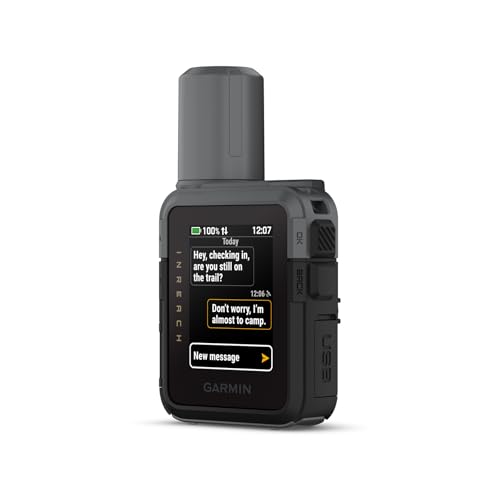 13% off
Garmin inReach Mini 3
Compact satellite communicator with a color touchscreen, two-way Iridium messaging, interactive SOS, tracking, and weather.
$389.99
$449.99
Get on Amazon
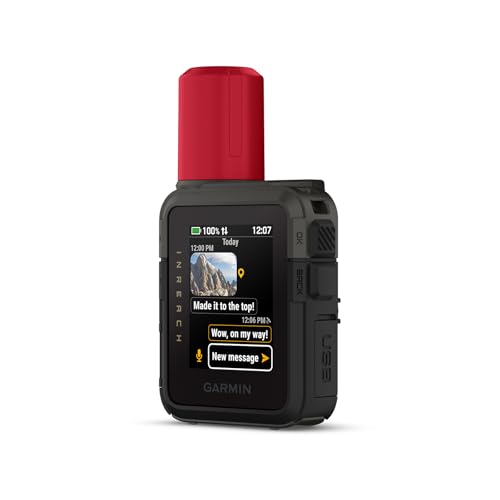 11% off
Garmin inReach Mini 3 Plus
Everything in the Mini 3 plus a microphone and speaker for 30-second voice messages and longer texts over satellite.
$445.75
$499.99
Get on Amazon
Oura is adding two new fitness features to its smart ring: Cardio Effort, a weekly score for how hard your heart has been working, and a new VO2 Max estimate that no longer needs a walking test. Oura announced both on October 20. Two days later, the Wall Street Journal reported that Oura has passed 6 million paying members.

Oura built its name on sleep and recovery. These features push it further into training, and closer to Garmin and Whoop.
Cardio Effort

Cardio Effort scores each workout by how hard and how long your heart worked, using your heart rate compared with your resting heart rate. Oura says it is based on TRIMP (training impulse), a long-standing way of measuring training load, and it doesn’t ask you how hard a session felt.
Each workout adds to a weekly total, and Oura places that total in one of five ranges against your own baseline: Light, Fair, Maintaining, Building, or Reaching. The app shows the week on a chart next to your baseline band, with each activity’s contribution listed underneath.
Garmin has revamped its developer API system, the Garmin Connect Developer Program. As DC Rainmaker first reported, the program had been closed to new applications since March 2026, and Garmin has now reopened it with new access tiers.

The Garmin Connect APIs are how other apps and services send data in and get data out of Garmin Connect. When you link your Garmin account to a training platform, a health app, or a coaching service, that service uses these APIs to receive your activities and daily health data, such as steps, sleep, and heart rate, after your watch syncs. Some services also use them the other way, to send routes, courses, and structured workouts to Garmin Connect so they show up on your device.
The new setup has two tracks: Personal, for people who want their own data, and Business, which is split into Starter and Enterprise access.

Garmin has posted Connect IQ SDK 9.3.0, the newest version of the toolkit developers use to build apps, watch faces, and data fields for Garmin watches and Edge bike computers. For the first time, Garmin’s developer documentation describes ways for third-party apps to record from the microphone, play sound through the watch, and turn on LTE on the watches that have it.

Everything below comes from Garmin’s own API documentation, which was updated on October 19, 2026. These are tools for developers, so nothing changes on your watch until app makers update their apps to use them.
Microphone
A new audio capture feature lets an app record from the watch’s microphone. Apps can record in WAV or Ogg, as uncompressed audio or compressed Opus, at 8 to 44.1 kHz, in mono or stereo. Garmin also offers a filter for noise reduction and echo cancellation, and the app receives the audio in chunks as it records, so it can process speech while you are still talking.
There are limits. An app has to ask for a new microphone permission. Recording only works while the app is open on screen, and Garmin’s docs list an error for recording attempted in the background. The audio tools are for watch apps, glances, and audio apps. Watch faces cannot use them.
Speaker
A matching audio output feature lets apps play sound. The sound can be a clip packed into the app, audio the app puts together while it runs, or a stream the app feeds piece by piece, for example audio downloaded from the app’s own service. Apps get play, pause, resume, seek, and volume controls from 0 to 100, plus updates on playback position and state. Playback needs its own permission.
The docs do not say whether an app can choose between the watch speaker and Bluetooth headphones, and there is no text-to-speech tool. An app that wants to talk to you has to supply the recorded or generated audio itself.
LTE
Apps can now check and control LTE. One call reports whether LTE can be used, and if not, why: it is turned off, the watch is in airplane mode, LTE is not available in the region, the modem is on standby, it is still searching, or it is running in reduced frequency mode. Two more calls turn the LTE connection on and off, with optional updates when the connection changes.
Garmin lists the LTE status check for the Fenix 8 Pro (47mm, 51mm, and MicroLED, plus Quatix 8 Pro), the Fenix 9 and Fenix 9 Pro, and the MARQ (Gen 3) models. The SDK lets developers include these calls in an app for any watch on the newest API level, including models without LTE, so apps are expected to check whether LTE is actually available before relying on it.
The Edge 1060 succeeds the Edge 1050 as Garmin’s flagship cycling computer, bringing a smaller, lighter design, voice controls, and several new navigation tools. At $799.99, it costs $100 more than the Edge 1050 did at launch, with orders opening October 23. Despite the changes, Garmin has kept the same 3.5-inch display, battery life ratings, and much of the existing training functionality.

Size, Weight, and Display
Both devices feature a 3.5-inch color touchscreen with a resolution of 480 x 800 pixels, but Garmin has reduced the size of the housing on the newer model. The Edge 1060 measures 58.5 x 107 x 16.3 mm, compared with 60.2 x 118.5 x 16.3 mm for the Edge 1050. That makes it 11.5 mm shorter and 1.7 mm narrower, with no change in thickness.
The Edge 1060 also weighs 142 g, down from 161 g, a reduction of 19 g. Both devices retain an IPX7 water-resistance rating, 64 GB of storage, and a built-in speaker. Garmin also highlights redesigned buttons on the Edge 1060 for use in wet conditions or while wearing gloves.
| Edge 1060 | Edge 1050 | |
|---|---|---|
| Price at launch | $799.99 | $699.99 |
| Size | 58.5 x 107 x 16.3 mm | 60.2 x 118.5 x 16.3 mm |
| Weight | 142 g | 161 g |
| Display | 3.5-inch color touchscreen, 480 x 800 | 3.5-inch color touchscreen, 480 x 800 |
| Water rating | IPX7 | IPX7 |
| Storage | 64 GB | 64 GB |
| Battery | 20 hours demanding use, 60 hours battery saver | 20 hours demanding use, 60 hours battery saver |
| Speaker | Yes | Yes |
| Microphone | Yes | No |
| Reverse charging | Yes | No |
Battery Life and Reverse Charging
Battery life is unchanged, with Garmin rating both devices for up to 20 hours of demanding use or up to 60 hours in battery saver mode.
The Edge 1060 does introduce reverse charging through its USB-C port, allowing it to provide power to another device, such as a Varia light or phone. Garmin notes that this feature is not intended for use while riding.
Voice Control and Messaging
The addition of a microphone is one of the Edge 1060’s biggest hardware changes. Riders can say “Okay, Garmin” to issue commands, including reporting a pothole, finding the nearest coffee shop, or checking their heart rate. Depending on the request, the Edge can change screens, read data aloud, or suggest a route.
Voice commands are supported in select languages, and Garmin cautions that performance may vary with riding conditions.
The Edge 1060 also supports voice messaging through the Garmin Messenger app when paired with a phone. Riders can send recorded messages and listen to incoming messages through the device’s speaker. Garmin lists hands-free voice control, voice messaging, and Messenger support as Edge 1060 features not available on the Edge 1050.
Garmin announced the Tacx Nēra this morning, a direct-drive indoor smart trainer with built-in movement. It comes with a preinstalled 11-speed cassette, or as a Zwift Ready version with a preinstalled Zwift Cog and Zwift Click. Both versions are $999.99, and Garmin’s product page says they will be available to order on October 23.

The Nēra is a new name rather than a replacement for an existing trainer. Garmin calls it an expansion of its smart trainer lineup. For comparison, the Tacx NEO 2T with Zwift Cog and Click, which Garmin launched in August, is $1,099.99, and its movement comes from the separately sold NEO motion plates. On the Nēra, the movement is built in.
“We are excited to expand our indoor smart trainer lineup with the addition of Tacx Nēra. Designed for passionate cyclists who are looking to take their indoor training more seriously, this trainer delivers an unbeatable combination of performance features at an incomparable value with its realistic ride feel, seamless integration with other Garmin products and effortless ease of use.”
Susan Lyman, Garmin vice president of consumer sales and marketing
Movement and resistance
Motion pods built into the trainer let the bike move forward, backward, and side to side. Garmin says power and cadence are accurate to within 1%. The trainer simulates grades up to 20% and handles sprints up to 2,200 watts. A race mode gives a faster response to attacks and breakaways in virtual races, in select training apps.
Setup and apps
The standard Nēra ships with a SHIMANO/SRAM 11-speed cassette already installed. The Zwift Ready version swaps that for a Zwift Cog and adds the Zwift Click controller for virtual shifting in Zwift and ROUVY, which need an active subscription. Garmin says new Zwift subscribers who buy the Zwift Ready version can get a free membership offer, but it does not say for how long.
Built-in Wi-Fi is meant for a steadier connection in Zwift and ROUVY. The Tacx Training app has a free workout library, and its premium plan is free for 45 days with a Nēra. Garmin Coach plans set up in Garmin Connect can be ridden in the Tacx Training app.
The Nēra works with the Tacx Alpine gradient simulator, which tilts the bike for grades from 25% up to 10% down and adds virtual steering in compatible apps. A compatible Edge or Garmin watch can also control the trainer.
Specs
From Garmin’s product page:
Garmin announced the Edge 1060 this morning, the successor to the Edge 1050. It has a 3.5-inch touchscreen and a built-in speaker and microphone, so riders can use voice commands and send voice messages. Garmin lists it at $799.99, and its product page says it will be available to order on October 23.

The Edge 1050 launched in June 2024 at $699.99, so the 1060 is $100 more. Battery ratings are unchanged: up to 20 hours in demanding use and up to 60 hours in battery saver mode, the same figures Garmin gave the 1050. The 1050 already had a speaker. The microphone, and the voice control that comes with it, are new.
“Edge 1060 is designed to keep cyclists focused and in control from the first mile to the finish. Voice control helps riders access all the information they need while keeping their grip on the bars. Combined with advanced training insights and new intelligent navigation features, cyclists now have more of what they need to reach their goals and ride more confidently.”
Susan Lyman, Garmin vice president of consumer sales and marketing
Voice control
Saying “Okay, Garmin” starts a voice command. Garmin’s examples are “Report a pothole,” “Route me to the closest coffee shop,” and “What is my heart rate?” The Edge responds by changing screens, reading stats out loud, or suggesting routes. Garmin says voice commands work in select languages and that performance can vary with riding conditions.
With a connected phone, the on-device Garmin Messenger app can send voice messages, and incoming messages play through the speaker. The speaker also handles navigation and workout prompts and the digital bike bell.
Garmin also says it added buttons for riding in bad weather or with gloves.
Navigation
- Route Options shows several routes to a destination, compared by ride time, elevation, and bike type.
- Route Previews shows distance, estimated ride time, traffic, and reported road hazards before the ride starts.
- Up Ahead lists the nearest points of interest you pick, such as coffee shops, restrooms, or gas stations, along the route.
- Road closure alerts come from closures reported by other Garmin cyclists, alongside existing hazard reports such as potholes and aggressive animals. They need a paired phone with the Garmin Connect app. Hazards can now be reported by voice.
- Free Flow Routing looks for routes with the fewest stops, intersections, and slowdowns.
Garmin announced the Edge Explore 3 and Edge Explore 3 Plus this morning, the successors to the Edge Explore 2. Both are navigation-focused cycling computers with a 3-inch touchscreen. The Plus adds a speaker, a microphone, and Wi-Fi. Garmin lists them at $399.99 and $499.99, and its product pages say both will be available to order on October 23.

The Edge Explore 2 launched in July 2022 at $299.99, so the base model is $100 more. Battery saver mode doubles from 24 hours on the Explore 2 to 48 hours on both new models. In demanding use, the Explore 3 matches the Explore 2 at 16 hours, and the Plus is rated at 14 hours.
“Whether setting out on a weekend ride, commuting across town or starting a fitness journey, cyclists of any skill level can depend on Edge Explore 3 to help guide every ride and support their goals. With intuitive routing, personalized training plans, a suite of connected features and superior battery life, these durable bike computers bring ride essentials together into one easy-to-use device.”
Susan Lyman, Garmin vice president of consumer sales and marketing
Navigation
Both models have bike-specific maps and turn-by-turn directions, plus the following:
- Route options compares several routes by ride time, total elevation, and bike type.
- Up Ahead lists the nearest points of interest you pick, such as coffee shops, restrooms, or gas stations, along the route.
- Road hazard alerts come from hazards reported by other Garmin cyclists, such as potholes, road closures, and aggressive animals. Riders can report hazards too. This needs a paired phone with the Garmin Connect app.
- Free Flow Routing looks for routes with fewer stops, intersections, and slowdowns.
- Pin drop navigation is new. A pin or point of interest from Google Maps or Apple Maps on your phone can be sent to the Edge, which builds a bike route to it.
What the Plus adds
The Edge Explore 3 Plus has a speaker and microphone. Voice control can request a new route, read in-ride stats, report a road hazard, and change screens. The microphone sends voice messages through the on-device Garmin Messenger app, and the speaker plays incoming messages, workout and navigation prompts, and a digital bike bell.
Garmin’s spec pages also list Wi-Fi and a Wi-Fi map manager on the Plus only. The Plus weighs 121.5 g, and the Explore 3 weighs 118.8 g.
Training, eBikes, and safety
Changelog for Version 4.20
- Enable Run/Walk detection for Trail Run activity.
- Fixed the issue that the recorded time of the activity wasn't aligned with the time on the phone.
- Allow the user to calibrate distance for Treadmill Run/Indoor Rowing/Indoor Cycling before saving the activity on device.
- Accumulate the duration time alert for speaking out
- Block stress alert when Auto Activity Detection is recording.
- Support vibration for smart notifications/incoming calls.
- Fixed the issue that bedtime approaching notification wasn't triggered occationally.
- Show Heart Rate on Live Activity before recording starts.
- Fixed the issue that the pinned activity was changed to Timed Activity after changing the phone language.
- Fixed issue that can't edit reps during workout.
- Improve system stability.
The band has no screen or on-device menu, so the update downloads and installs automatically the next time it syncs with the Garmin Connect app.
Track every device on our software updates page, or see the complete CIRQA Smart Band history on the Garmin Wiki.
Developers are waiting up to two weeks for Garmin to approve new Connect IQ watch faces, data fields, and apps, against a review window the store itself puts at three days. Garmin says the cause is a surge in submissions, and some developers believe mass-produced watch faces are behind it.

When a developer submits an app, the Connect IQ store shows a preview page with this note:
This page is in preview mode and only visible to your account until your app is approved. This process could take up to 3 days.
Since late September, that promise has not held. Garmin’s developer forum has filled with threads about submissions stuck in “Pending” for a week or more, with no approval, no rejection, and no reply from support. On October 16, Brandon from Garmin’s Connect IQ team answered in a bug report that Garmin has marked as acknowledged. As the5krunner reported, he attributed the backlog to:
An enormous influx of app submissions in the last month.
Brandon said the volume shows no sign of slowing, that the team is working through approvals as fast as it can, and that the store has only fallen this far behind around major holidays such as Christmas. Garmin has not said when review times will return to normal. In the same thread, a developer asked whether submissions from developers who pay for a merchant account could be prioritized. Brandon replied, “Yes, this is reasonable and is our plan.”
Developers are waiting weeks for approvals
The forum threads show how wide the backlog runs. In one thread, a data field called Visletic has been pending since October 2, and a developer publishing as Graticule listed 13 watch faces submitted between October 9 and October 13 with no approval or rejection. In another, a developer reported eight pending faces, some dating back to October 2. A new merchant called CoffeePot has 17 paid faces waiting since October 2 to 4, and another developer counted more than 16.
Some submissions do get through. A first-time app called LNSMorse, submitted on October 3, was approved after about 10 days. Graticule noted that updates to already-approved faces still clear within minutes, so the slowdown is hitting new listings far harder than updates.
Developers selling through Garmin’s merchant service report a second problem. The service requires a non-refundable $100 annual fee, and several developers say their accounts have flipped from “Active” back to “In review” without notice. Graticule’s account was approved on October 2, then showed “In review” again, and the merchant option vanished from the upload form after October 10. The developer’s emails to Garmin on October 8 and October 13 went unanswered. The5krunner documented the same pattern with Martin Kopecky of Proficode, whose account was approved October 1, reverted October 8, and became active again October 15. A paid watch face he submitted on October 2 was still pending.
TechRadar has published an interview with Garmin chief operating officer Brad Trenkle about the MARQ (Gen 3), Garmin’s third-generation luxury watch collection, which Garmin released on October 13.
The collection includes six models: the Athlete, Adventurer, Golfer, Aviator, Commander, and Diver. Each has its own design, with differences in the bezel, strap, markings, and materials.

TechRadar’s Andrew Williams wore the Adventurer and uses the interview to explore how Garmin takes much of the feature set associated with the Fenix line and puts it into a watch finished more like a traditional premium tool watch.

Trenkle told Williams that Garmin was not trying to build a watch someone buys with the expectation of handing it down through generations. A MARQ is still a sealed electronic device with a lithium battery, and he said Garmin is clear about what that means when it is compared with mechanical watches from brands such as Patek Philippe, Rolex, or Audemars Piguet.
Our Garmin watch comparison has been rebuilt from the ground up. It loads fast, works properly on phones, and filtering, sorting and comparing are now instant.

So we rebuilt it. The new Garmin watch comparison is live now, with a cleaner layout that gives you more context on each watch and fits more watches on the screen. Loading, filtering, match counts and sorting are all instant.
Every Garmin watch, including every variant
The comparison covers 168 Garmin watches including all series variants. The Forerunner 570 (42mm) and Forerunner 570 (47mm) each get their own card with their own size, weight, battery life and price, so you’re never comparing the wrong version.
Each card shows the case size, screen size, battery life, weight and current price at a glance, including the discount when a watch is on sale, plus links to buy it and to its wiki. Tap Details for the full spec sheet.
Filters that show you what you’ll get
- Quick filters along the top for popular choices like AMOLED, Latest models, On sale and Elevate Gen 5, picked from what readers filter by most.
- 119 features in 11 groups, from sensors and display to training, health and activity features. Type into “Find a feature” to jump straight to ECG, maps or anything else.
- Ranges for price, case size, screen size, battery life and weight, with one-tap presets or your own numbers.
- Live match counts on every option, so you know how many watches a filter leaves before you tap it. If you filter down to nothing, the page suggests which filter to remove.
- Search by name, with suggestions if you mistype.
- Ten ways to sort: newest, price (low or high), longest battery, lightest, smallest case, thinnest, biggest screen, most features, or name.
Compare side by side
Tick Compare on up to four watches (two on a phone) and open the comparison. An “In short” summary explains in plain words where each watch wins: which one costs the least, lasts the longest, weighs the least, or adds features the others lack.
Below that, the key specs highlight the winner and show how far behind the others are, and an “Only on this one” list calls out each watch’s exclusive features. The All features and Battery tabs go deeper, and the “Only differences” switch hides everything the watches have in common.

Built for phones
The old page was designed for a big screen and struggled on mobile. The new one was built for phones from the start: two watches per row, filters in a sheet that slides up, a Compare box on every card, and a comparison laid out for a small screen.

Share exactly what you see
Every search, filter, sort and comparison is saved in the page’s link. Tap Share results to send someone the exact list you’re looking at, or use the link button inside a comparison to share that matchup. For example, here’s every AMOLED Garmin sorted by battery life and the Forerunner 970 vs. Forerunner 570.
Spot a missing watch or a spec that looks wrong? Use the Feedback button on the comparison page or email us at team@garminrumors.com.


