


Understanding the Two Heart Rate Monitoring Methods
How Optical Heart Rate Monitors Work
Optical heart rate monitors, like those found in Garmin watches and most other wearables, use photoplethysmography (PPG). These sensors emit green light from LEDs, which penetrates the skin and is reflected back to the sensor. The light’s reflection changes indicate blood flow, allowing the sensor to calculate heart rate.

This method is popular for its convenience and non-intrusive design. It can work continuously, even during sleep, and provides valuable data for tracking trends over time, such as resting heart rate, stress levels, and sleep quality. However, PPG has its limitations. Rapid wrist movement, different skin tones, tattoos, and sweat can all interfere with accuracy, especially during intense activities like interval training.
How Chest Straps Work
Chest straps like Garmin’s HRM-Dual and HRM-Pro Plus take a more direct approach to heart rate measurement by using electrocardiography (ECG). These devices detect each heartbeat’s electrical signals via electrodes embedded in the strap. The result is a precise, instantaneous heart rate reading that remains consistent even during rapid movements or intense workouts.

Chest straps are considered the gold standard for heart rate monitoring. They excel in high-intensity activities, rapid heart rate changes, and situations where precise data is critical, such as heart rate zone training. However, they require additional equipment, a strap, and may feel restrictive during extended use.
Why Choose One Method Over the Other?
Optical HRM: Convenience Meets Versatility
Optical HRM is perfect for users who value convenience and 24/7 tracking. It’s simple. It’s built into the watch you are already wearing. It’s well-suited for:
- Daily Wear: Tracks resting heart rate, stress, and sleep seamlessly.
- Steady-State Workouts: Performs reliably in activities like walking, jogging, and yoga, where heart rate changes are gradual.
- Casual Fitness Tracking: Offers a good balance of accuracy and usability for most users.
However, optical HRM struggles during high-motion activities like rowing or cycling, where wrist movement can disrupt readings. It also lags behind in capturing rapid heart rate changes during interval training or sprints.
Chest Straps: Precision for data junkies, athletes, or those that have specific reasons to need precise heart rate data
Chest straps shine in scenarios that demand precision, such as:
- High-Intensity Interval Training (HIIT): Captures rapid changes without delay.
- Cycling or Rowing: Remains unaffected by wrist movement.
- Heart Rate Zone Training: Ensures you stay within your desired training zone.
- Swimming: Waterproof models can track underwater more accurately than an optical HRM.
The trade-off is convenience. Chest straps require extra setup; some users find them less comfortable for exercise, and all-day wear is often impractical.
The Trade-Offs: Wrist-Based vs. Chest Straps
| Feature | Optical HRM | Chest Strap |
|---|---|---|
| Convenience | Built into the watch | Requires additional gear |
| Accuracy (Steady State) | Good | Excellent (~99%) |
| Accuracy (Intervals) | Moderate (lag in rapid changes) | Excellent (~99%) |
| Motion Resistance | Moderate | High |
| Swimming | Limited Accuracy | Higher Accuracy |
Garmin’s Elevate Sensors: Breaking Down the Generations
Garmin has continuously refined its optical HRM technology, with the Elevate 4 and Elevate 5 sensors representing the latest advancements.
 Elevate 4 (left) vs, Elevate 5 (right), showing an improved LED layout
The Elevate 4 Sensor
The Elevate Gen 4 sensor brings improvements over the prior generation, offering enhanced accuracy and reliability across a variety of activities. It features additional red and infrared LEDs, which provide better light penetration and improved accuracy, particularly for users with darker skin tones or tattoos that may have interfered with readings in earlier models.
The Gen 4 sensor is designed for efficiency, offering continuous heart rate and SpO2 monitoring with minimal impact on battery life. Its refined optical layout enhances accuracy during high-intensity and interval training, making it ideal for athletes and dynamic workouts. However, it’s worth noting that it’s not Garmin’s latest sensor; the Fenix 7 Pro and Epix (Gen 2) Pro introduced an upgraded version with further improvements in accuracy and added ECG capabilities.
The Elevate 5 Sensor
The Fenix 7 Pro and Epix Pro introduced the Elevate Gen 5 heart rate sensor, which builds upon the advancements introduced with the Elevate Gen 4 sensor, delivering even greater accuracy, efficiency, and feature expansion. Here’s how the Gen 5 compares to the Gen 4, along with where it further improves tracking capabilities:
- ECG Capability
One of the most significant upgrades in the Elevate Gen 5 sensor is its ability to capture electrocardiogram (ECG) data. This addition allows users to measure heart rhythms directly from the watch, a feature that elevates health monitoring, particularly for detecting arrhythmias. - Enhanced LED Array
Building on the red and infrared LEDs introduced in Gen 4, the Gen 5 sensor uses a more advanced multi-color LED array, adding green, red, and infrared lights, which penetrate the skin more effectively. This LED setup improves the accuracy of SpO2 and heart rate readings across a wider variety of skin tones and environments, enhancing reliability during diverse activities and conditions. - Improved Efficiency and Battery Impact
The Gen 5 sensor is designed with efficiency in mind, refining the power requirements for continuous SpO2 and heart rate monitoring. While the Gen 4 sensor itself had seen efficiency improvements, Gen 5 reduces battery impact further, ensuring that frequent monitoring can occur without compromising overall battery life. - Refined Optical Layout
The Gen 5 features a redesigned optical layout that improves data collection during high-intensity activities, making it better at tracking rapid heart rate changes. The arrangement of LEDs and detectors in Gen 5 enhances signal quality, allowing for quicker response times and more accurate data capture during intervals and sprints.
How Does Elevate 5 ECG Compare to Continuous ECG of an HRM Strap?
The ECG in Garmin’s Elevate 5 sensor and the ECG technology in chest straps like the HRM-Pro Plus serve distinct purposes, each optimized for different scenarios. The Elevate 5’s ECG is designed for intermittent health diagnostics, offering single-lead readings to detect irregularities like atrial fibrillation. This requires manual activation, where the user completes a circuit by touching specific contact points on the watch.
Continuous ECG monitoring with the Elevate 5 is impractical due to limitations in sensor placement, movement interference, and design constraints. The sensors on a smartwatch are positioned on the wrist, which is less stable than the chest, making them more susceptible to noise from wrist movement and muscle activity. Additionally, continuous ECG tracking would require constant, precise contact with the skin, which is difficult to achieve on the wrist during daily activities and would be highly uncomfortable for users.
In contrast, chest straps are designed for continuous ECG monitoring, leveraging their placement around the chest to minimize motion artifacts and muscle noise. They use multi-electrode systems to ensure consistent and accurate readings during dynamic activities, making them ideal for fitness tracking. While they lack the diagnostic capabilities of the Elevate 5’s ECG, chest straps excel at providing real-time performance data during exercise. Together, these technologies address different needs: the Elevate 5’s ECG offers short-term diagnostic insights, chest straps deliver high-precision continuous tracking for workouts, and optical HRM bridges the gap with 24/7 trend monitoring.
A study comparing the two:
The Quantified Scientist, a social media personality specializing in wearable technology, reviewed the accuracy of Garmin’s Elevate 5 optical heart rate sensor compared to its predecessor, the Elevate 4. His analysis explains how the Elevate 5, featured in the Fenix 7 Pro and Epix Gen 2 Pro, compares against other devices and traditional chest straps.

In the comparison chart, the Fenix 7 Pro and Epix Gen 2 Pro, both equipped with the Elevate 5 sensor, scored higher in accuracy than their non-Pro counterparts—the Fenix 7 and Epix Gen 2, which utilize the Elevate 4 sensor. This improvement suggests that the Elevate 5 sensor does enhances Garmin’s optical heart rate monitoring, narrowing the gap between wrist-based monitors and chest straps. While the Elevate 5 shows progress, it still demonstrates room for further improvement, particularly in activities with rapid heart rate fluctuations, as highlighted by its relative position to other high-performing devices in the chart.
Other Accuracy Studies and Insights
1. Study on Wrist-Worn Optical vs. Chest Strap Heart Rate Monitors
A study published in BMC Sports Science, Medicine and Rehabilitation assessed the performance of a wrist-worn OHRM against an ECG-based chest strap monitor across a range of activities, including walking, running, cycling, gym exercises, household tasks, and sedentary behaviors. The study involved 199 healthy volunteers and 20 coronary artery disease patients. Key findings include:
- Data Coverage: The OHRM provided heart rate readings within ten beats per minute (bpm) of the chest strap for 92% to 98% of the time, depending on the activity.
- Mean Absolute Error: The average error was less than 3 bpm, which is considered clinically acceptable for various applications.
- Concordance Correlation Coefficient: A high correlation of 0.98 was observed between the OHRM and chest strap measurements.
These results suggest that wrist-worn OHRMs can offer reasonably comparable accuracy to chest straps in a broad range of activities.
2. Evaluation of Wrist-Based Heart Rate Monitors During Physical Activity
A study published in the Journal of Sports Sciences examined the accuracy of wrist-based heart rate monitors during physical activity. The researchers found that while wrist-based monitors are generally accurate at rest, their accuracy decreases during exercise, particularly during activities involving significant wrist movement. The study highlights the potential for motion artifacts to affect the readings of wrist-based monitors.
3. Accuracy of Wrist-Worn Heart Rate Monitors in Different Skin Tones
Research published in the Journal of Medical Internet Research investigated the impact of skin tone on the accuracy of wrist-worn heart rate monitors. The study concluded that while these devices are generally accurate, there can be variations in performance based on skin tone, with darker skin tones potentially affecting the accuracy of the readings.
It is worth noting that some of these studies are older than a few years, and the technology of optical HRMs has improved significantly in the past few years.
The Future of Heart Rate Monitoring
The next wave of heart rate monitoring improvements could further close the gap between wrist-based and chest-strap accuracy. Possible advancements include:
- Multi-Wavelength Sensors: Adding red and infrared LEDs for deeper penetration and reduced interference from skin tone or tattoos.
- AI-Driven Algorithms: Machine learning could personalize data correction for individual users.
- Continuous wrist-based ECG: Though technical challenges remain, this could provide a significant leap forward in heart rate monitoring by offering the precision of chest straps directly on the wrist. To achieve this, future advancements would need to address key obstacles, such as maintaining constant sensor contact with the skin, minimizing interference from wrist movement and muscle activity, and reducing battery consumption to ensure practicality for 24/7 use.
How Garmin Leverages Heart Rate Data: Why it Matters
Garmin leverages heart rate data as a foundational metric to provide users with a wide array of insights and performance analytics. Your heart rate is critical for calculating key metrics like VO2 Max, which measures aerobic fitness and endurance, and Race Time Predictions, which estimate your potential performance over specific distances. It is also integral to Training Load and Training Status, which assess the strain of your recent workouts and your current recovery state. Heart rate is also used to determine Calories Burned, ensuring more accurate energy expenditure calculations. During workouts, heart rate data is essential for Heart Rate Zone Training, guiding users to optimize training intensity for specific goals like fat burn or improving cardiovascular fitness.

Optical heart rate sensors, while generally accurate on average, can occasionally register brief spikes or drops in heart rate, which can significantly impact your data even if only for a few seconds. For example, these spikes can lead Garmin’s algorithms to misinterpret low-intensity activities as anaerobic workouts, resulting in inflated Anaerobic Training Effect scores, extended recovery times, and inaccurate maximum heart rate detections that affect your heart rate zones. While the average deviation might be minor, these brief but significant fluctuations highlight the limitations of optical sensors. Chest straps, on the other hand, provide more consistent and reliable readings, avoiding these issues.
Garmin’s reliance on this data highlights the importance of accurate heart rate monitoring, whether through wrist-based sensors or chest straps, to ensure precise and actionable insights. Choosing the right tool for heart rate monitoring ensures that Garmin’s insights and metrics are as accurate and actionable as possible for your fitness journey.
Conclusion: Choosing the Right Tool for Your Needs
Heart rate monitoring is essential to understanding your fitness and health, but no single method excels in every situation. Optical heart rate monitors (OHRM) offer convenience and versatility, making them ideal for everyday tracking and steady-state activities. Chest straps, on the other hand, provide unparalleled accuracy and consistency, particularly during high-intensity workouts, heart rate zone training, and dynamic sports. Given Garmin’s reliance on heart rate data to calculate key metrics like VO2 Max, race time predictions, and workout recommendations, using a chest strap can significantly enhance the precision of these analyses.
For a large proportion of users, the built-in optical sensor is sufficient for general use. However, a hybrid approach often works best for athletes or those focused on maximizing data accuracy: rely on your Garmin watch’s optical HRM for daily tracking and complement it with a chest strap during intense or precision-focused training. By understanding the strengths and limitations of each method, you can create a heart rate monitoring setup that provides the most accurate and actionable insights for your fitness journey.
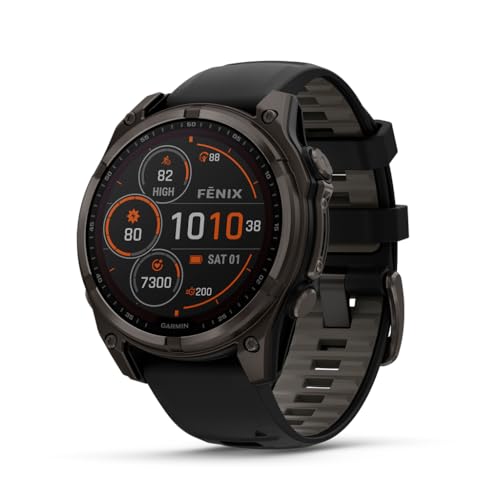
Elevate 5 Watches




Super insightful post — esp the study comparison on ECG accuracy. I’d been looking for more scientific evidence there and it was hard to pull it all together and compare. Well done.