

If you’ve ever owned a Garmin smartwatch, you’ve probably noticed that it charges using Garmin’s proprietary 4-pin connector, not the now-standard USB-C port. This choice might raise questions, especially with the recent EU regulations pushing USB-C on most portable electronics. So, why has Garmin stuck with its own design? The answer lies in a mix of practicality, technical considerations, and user needs. Let’s dive in.

A Brief History of Garmin’s Charging Connector
Garmin first introduced the current 4-pin connector in 2017 with the release of the Fenix 5 series. Designed to securely charge and sync without compromising waterproofing, this connector has since become a staple in Garmin’s watch lineup across various models, from the Forerunner to the Fenix series. The design has proven durable and efficient for Garmin’s active and outdoor-focused users, so the company has seen little need to change it.

Fenix 5 with 4-Pin Charger
USB-C: Not the Right Fit for Garmin Watches
USB-C is everywhere these days, from smartphones and laptops to cameras and headphones. It’s versatile, handles data and power, and will soon become mandatory for many devices in the EU. However, the EU directive on USB-C exempts smartwatches and fitness trackers due to their compact size, which poses some design challenges for USB-C ports.
The reasons Garmin hasn’t switched to USB-C for its smartwatches include:
- Space Constraints and Compact Design Needs: Smartwatches are small devices with limited internal space. Adding a USB-C port would mean sacrificing valuable room inside the watch, which Garmin prefers to allocate to more useful features like sensors, memory, and larger batteries. Unlike Garmin’s slim 4-pin connector, USB-C is relatively deeper, requiring more internal space. For Garmin’s rugged outdoor wearables, the priority is on functionality and maintaining a sleek profile that’s comfortable to wear during intense activities.
- Waterproofing and Durability: Garmin’s 4-pin connector has been carefully engineered for water resistance and durability, which is crucial for watches designed for swimming, diving, and outdoor use. While USB-C can be waterproofed, it doesn’t offer the same level of security for continuous submersion in water as the 4-pin design does. Garmin has noted that USB-C ports can be more susceptible to water ingress, especially for users involved in intense outdoor activities. For example, Garmin’s Edge cycling computers, which use USB-C, have faced reports of water intrusion issues in their ports.
- Charging Efficiency and Secure Connection: Garmin’s connector is optimized specifically for its watches, ensuring efficient charging and data transfer tailored to Garmin’s power needs and protocols. Unlike USB-C, which has to serve many device types, the 4-pin design is dedicated to Garmin’s devices, allowing the company to fine-tune its performance to meet battery and data requirements efficiently. This connection also physically secures the watch in place during charging, which can be beneficial for activities where the watch may need a stable connection to maintain power (like firmware updates).
- EU Regulations and Smartwatch Exemptions: Under the EU’s new regulations, most electronic devices sold in the region must adopt USB-C charging by the end of 2024. However, small devices like smartwatches and fitness trackers are exempt from this requirement due to the design limitations discussed above. Garmin can, therefore, continue using its proprietary connector for the foreseeable future without regulatory issues.
The USB-C Transition on Charging Cables
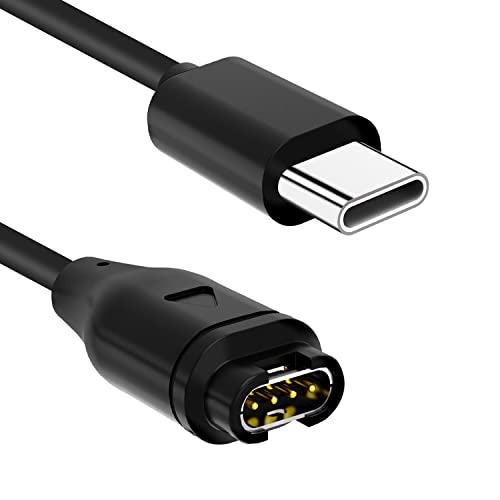
While Garmin’s watch side of the cable still uses the proprietary 4-pin connector, Garmin has recently updated the other end to USB-C for improved compatibility with more modern devices. Starting with the release of the Epix Gen 2 Pro and Fenix 7 Pro, all new Garmin watch cables now come with USB-C on one side and the 4-pin connector on the other. This update makes it easier to charge Garmin devices directly from USB-C power adapters and newer devices without needing additional adapters.

Why Garmin Hasn’t Fully Embraced Wireless Charging
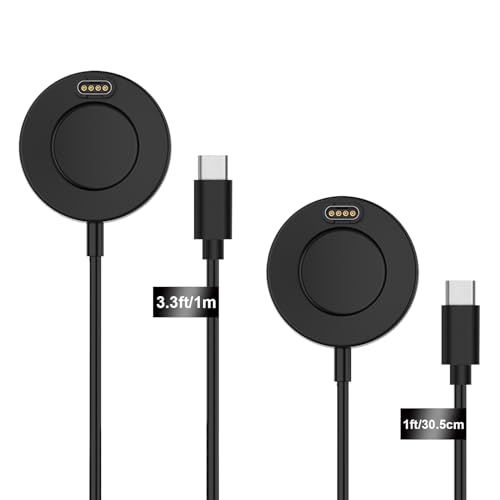
If USB-C isn’t a good fit, why hasn’t Garmin adopted wireless charging like other tech giants? After all, brands like Apple and Samsung use wireless (or Qi) charging for their watches, providing added convenience. Garmin does offer Qi wireless charging on select models, such as the Vivomove Trend, but has been slow to adopt it widely.

This decision comes down to a few factors:
- Device Size and Heat Management: Wireless charging coils add to the device’s thickness and can generate heat, impacting the battery and comfort during prolonged wear.
- Charging Precision and Power Efficiency: Wireless charging can sometimes be slower and less efficient, especially when the device isn’t perfectly aligned with the charger.
- User Needs and Product Prioritization: Garmin’s users prioritize battery longevity, ruggedness, and durability over charging convenience. Garmin’s design approach prioritizes functionality and performance over adopting every new feature, and wired charging remains better suited to its audience.
A Note on Dive Watches and Specialized Charging Solutions
While Garmin’s regular smartwatches use the 4-pin connector, the company’s dive watches in the Descent line come with a different, more robust charging solution. The Descent line is engineered specifically for diving, where waterproofing is paramount. This unique design supports even greater depths than the regular Garmin models, requiring a dedicated connector to withstand the extreme underwater pressures associated with deep dives.
Conclusion: The Practicality Behind Garmin’s Choices
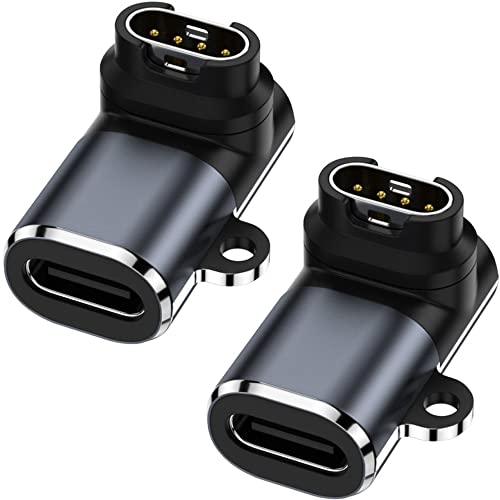
In summary, Garmin’s decision to stick with its proprietary 4-pin connector over USB-C or universal wireless options boils down to a few key considerations: space efficiency, waterproofing integrity, charging performance, regulatory compliance, and user-specific needs. While it may seem like a dated approach, the 4-pin connector has proven itself as a robust, functional solution that meets the needs of Garmin’s adventurous, performance-driven users. You can buy USBC to Garmin adapters to simplify your on-the-go charging needs.





Fascinating story and history. I support this exception to my normally very usb-c focused agenda.
Okay fine, but this doesn’t explain why every single device also has a different connector